

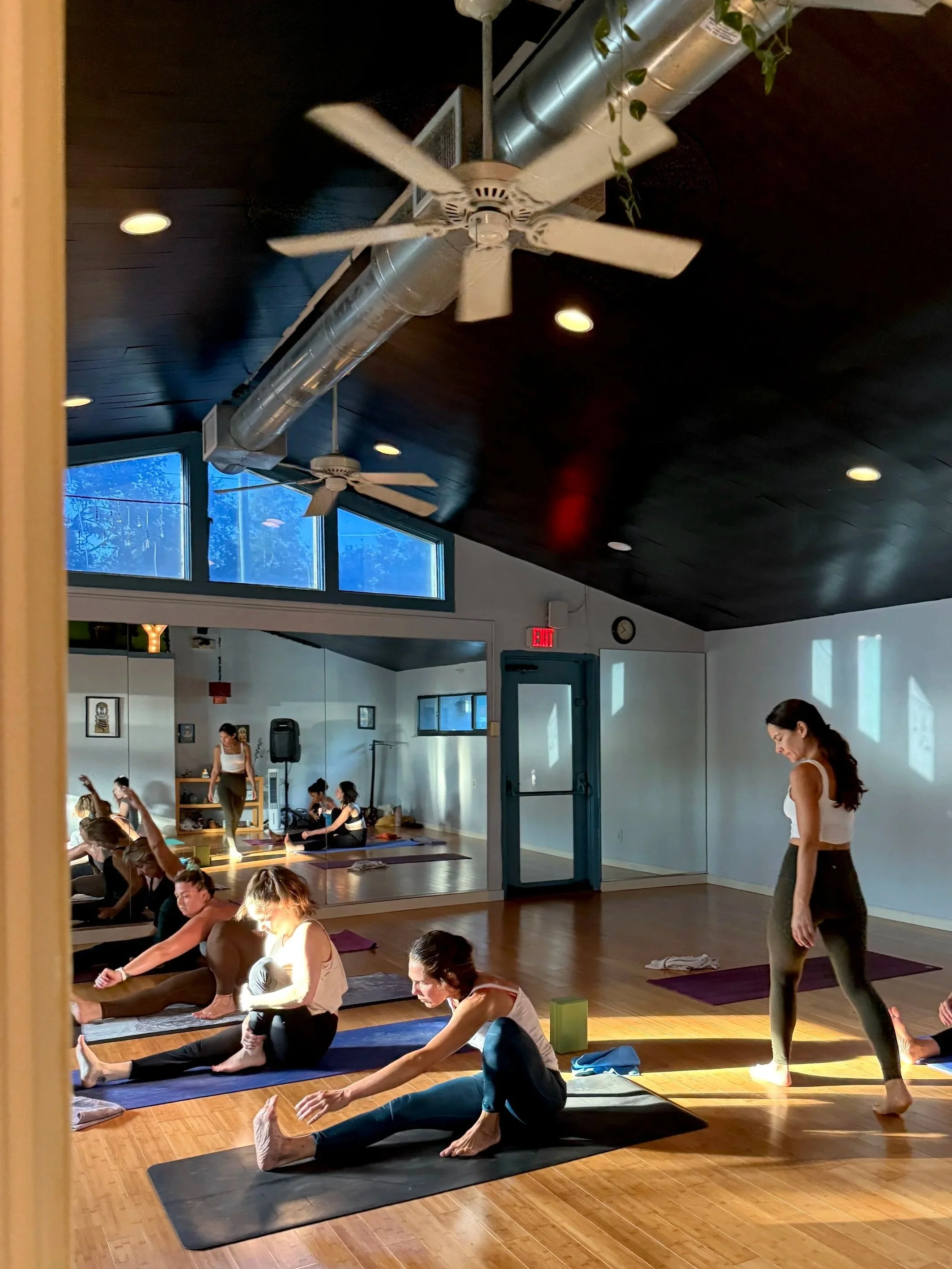
About Ashtanga Yoga
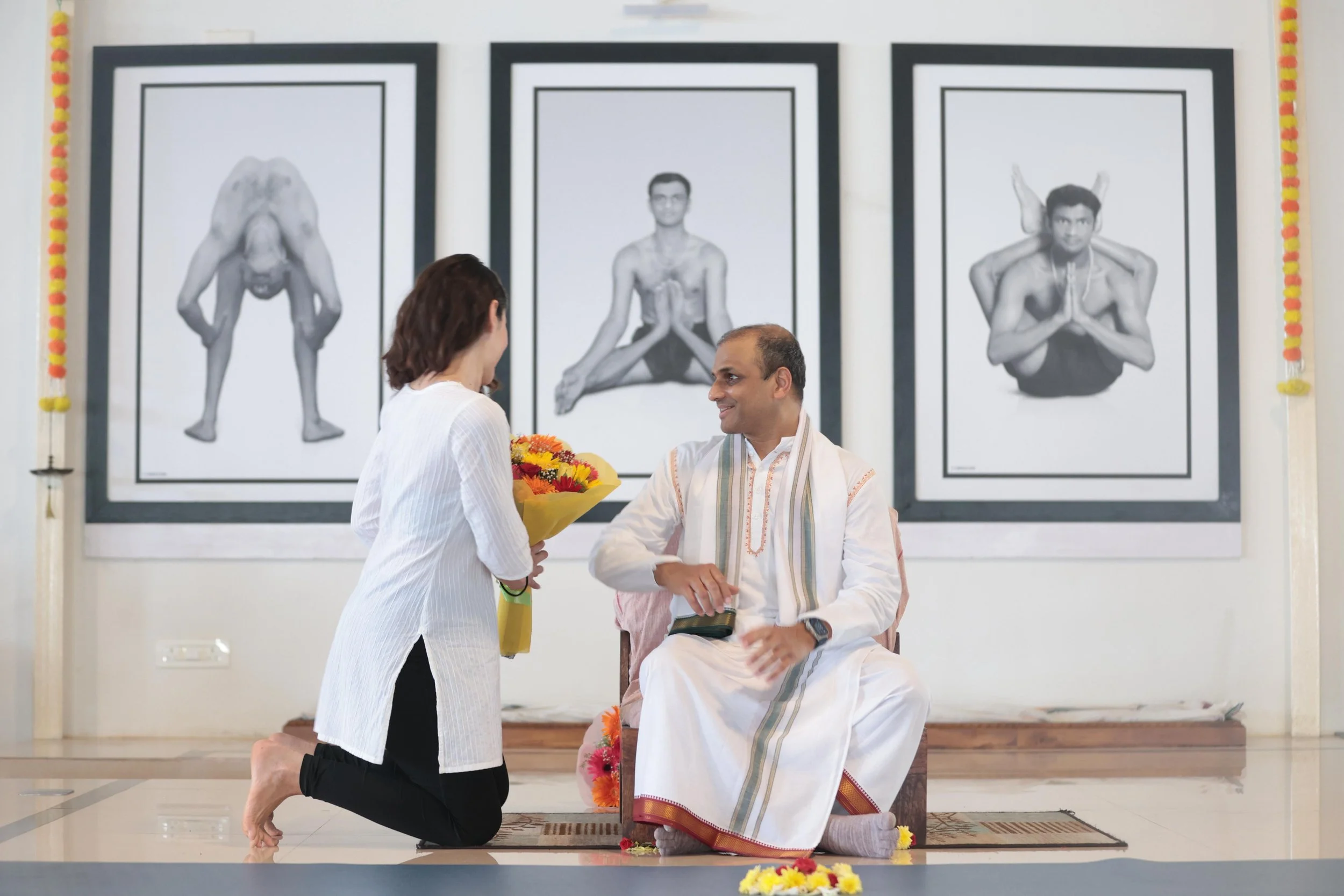
Lineage and Tradition
Ashtanga Yoga is a prehistoric system of yoga recorded by the sage Vamana Rishi in the Yoga Korunta. This ancient text was imparted to Sri T. Krishnamacharya in the early 20th century by his guru, Rama Mohan Brahmachari, and later passed down to his devoted student, Pattabhi Jois.
Today, this lineage continues through the Sharath Yoga Centre (SYC) in Mysore, India. This "Parampara"—the direct transfer of knowledge from teacher to student—ensures the practice remains as authentic and potent as it was centuries ago.
The Practice
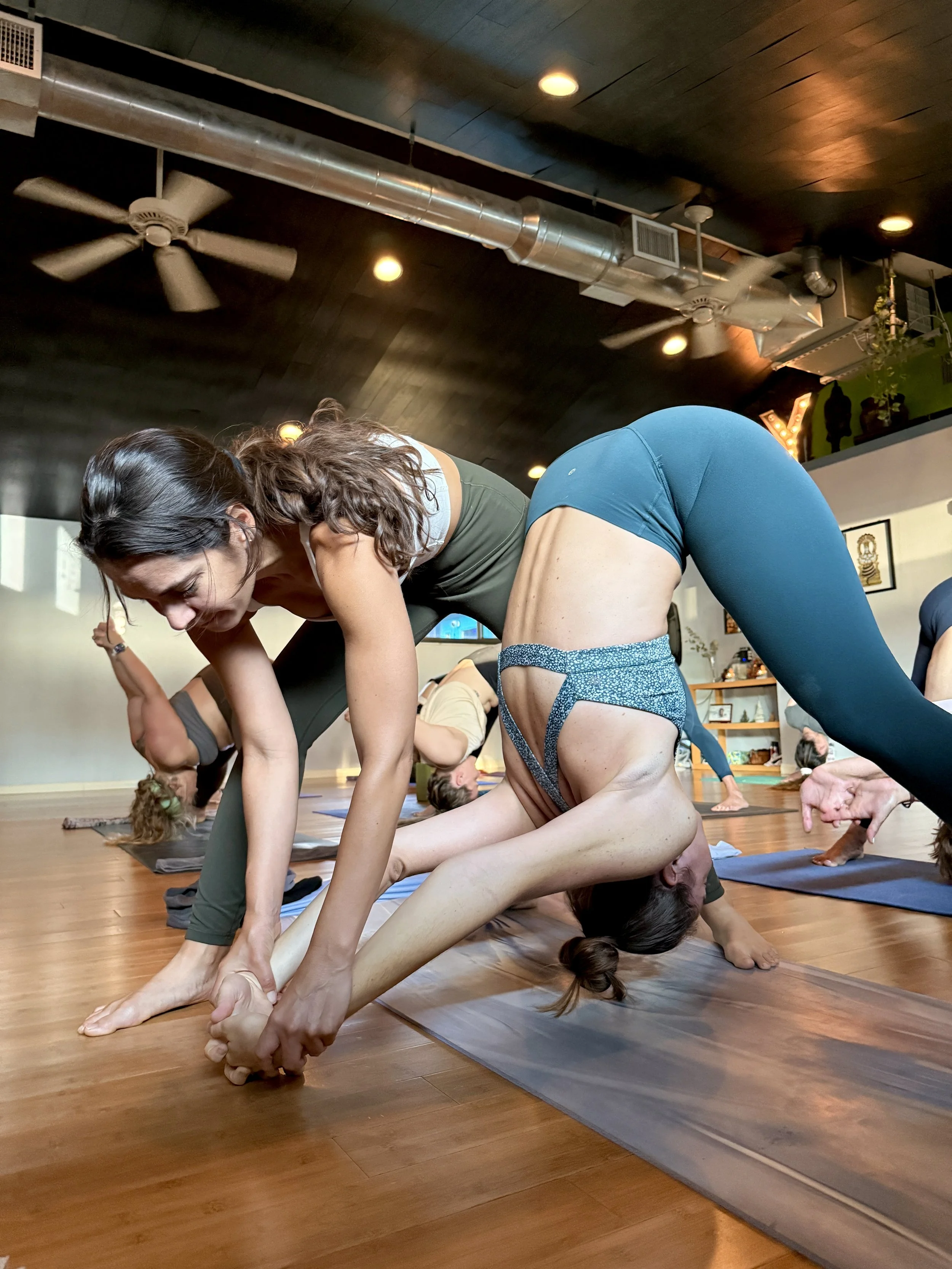
The beauty of Ashtanga lies in its consistency. Through the regular practice of a precise sequence of flowing asanas (postures), the body becomes flexible, strong, and light. As the body heats up, toxins are removed and the blood is purified, leading to the improvement of many physical ailments.
Beyond the physical, the combination of slow, controlled breathing and deep concentration creates incredible focus and a quiet mind. This moving meditation results in a lasting feeling of calmness and peace that stays with you long after you leave your mat.
Six Series’
The system is built upon six sequences: the Primary Series (Yoga Chikitsa), which detoxifies and aligns the body; the Intermediate Series (Nadi Shodhana), which purifies the nervous system; and the Advanced Series A, B, C, and D (Sthira Bhaga), which integrate the strength and grace of the practice.
Authorization
To ensure safety, physical alignment, and spiritual integrity, these six series should only be learned under the watchful eye of a teacher who has been granted Authorization or Certification directly from the source in Mysore. An authorized teacher has spent years dedicated to the practice and has been personally given the blessing to share this method with others.
Find A Teacher - SYC Authorized Teachers Directory

Moon Days
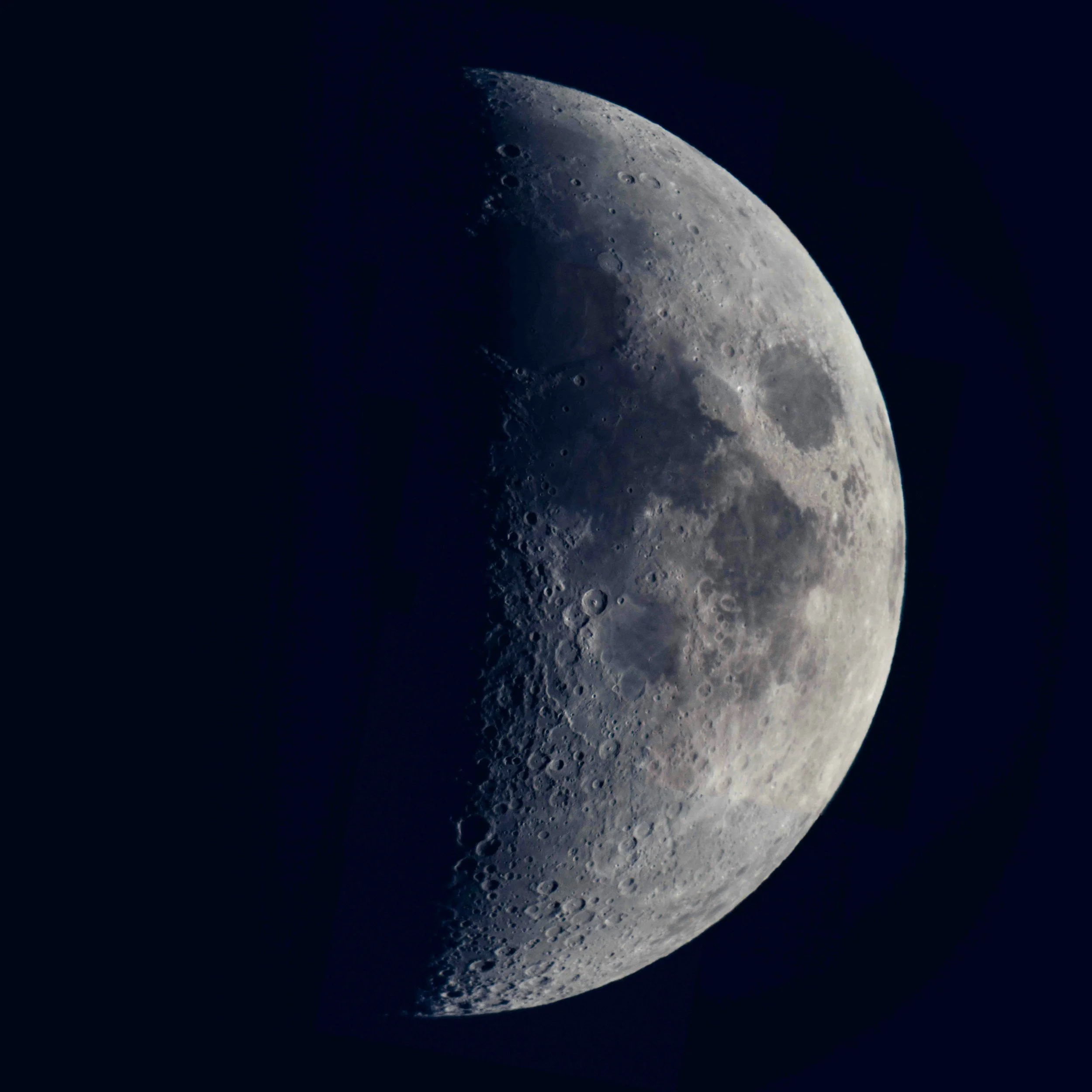
Both full and new moon days are observed as yoga holidays in the Ashtanga Yoga tradition. What is the reasoning behind this?
Like all things of a watery nature (human beings are about 70% water), we are affected by the phases of the moon. The phases of the moon are determined by the moon’s relative position to the sun. Full moons occur when they are in opposition and new moons when they are in conjunction. Both sun and moon exert a gravitational pull on the earth. Their relative positions create different energetic experiences that can be compared to the breath cycle. The full moon energy corresponds to the end of inhalation when the force of prana is greatest. This is an expansive, upward moving force that makes us feel energetic and emotional, but not well grounded. The Upanishads state that the main prana lives in the head. During the full moon we tend to be more headstrong.
The new moon energy corresponds to the end of exhalation when the force of apana is greatest. Apana is a contracting, downward moving force that makes us feel calm and grounded, but dense and disinclined towards physical exertion.
The Farmers Almanac recommends planting seeds at the new moon when the rooting force is strongest and transplanting at the full moon when the flowering force is strongest. Practicing Ashtanga Yoga over time makes us more attuned to natural cycles. Observing moon days is one way to recognize and honor the rhythms of nature so we can live in greater harmony with it.
2026 Moon Days
January 04, 18
February 2, 17
March 3, 19
April 2, 17
May 1, 17
June 15, 29
July 14, 29
August 12, 28
September 11, 26
October 10, 26
November 9, 24
December 9, 24
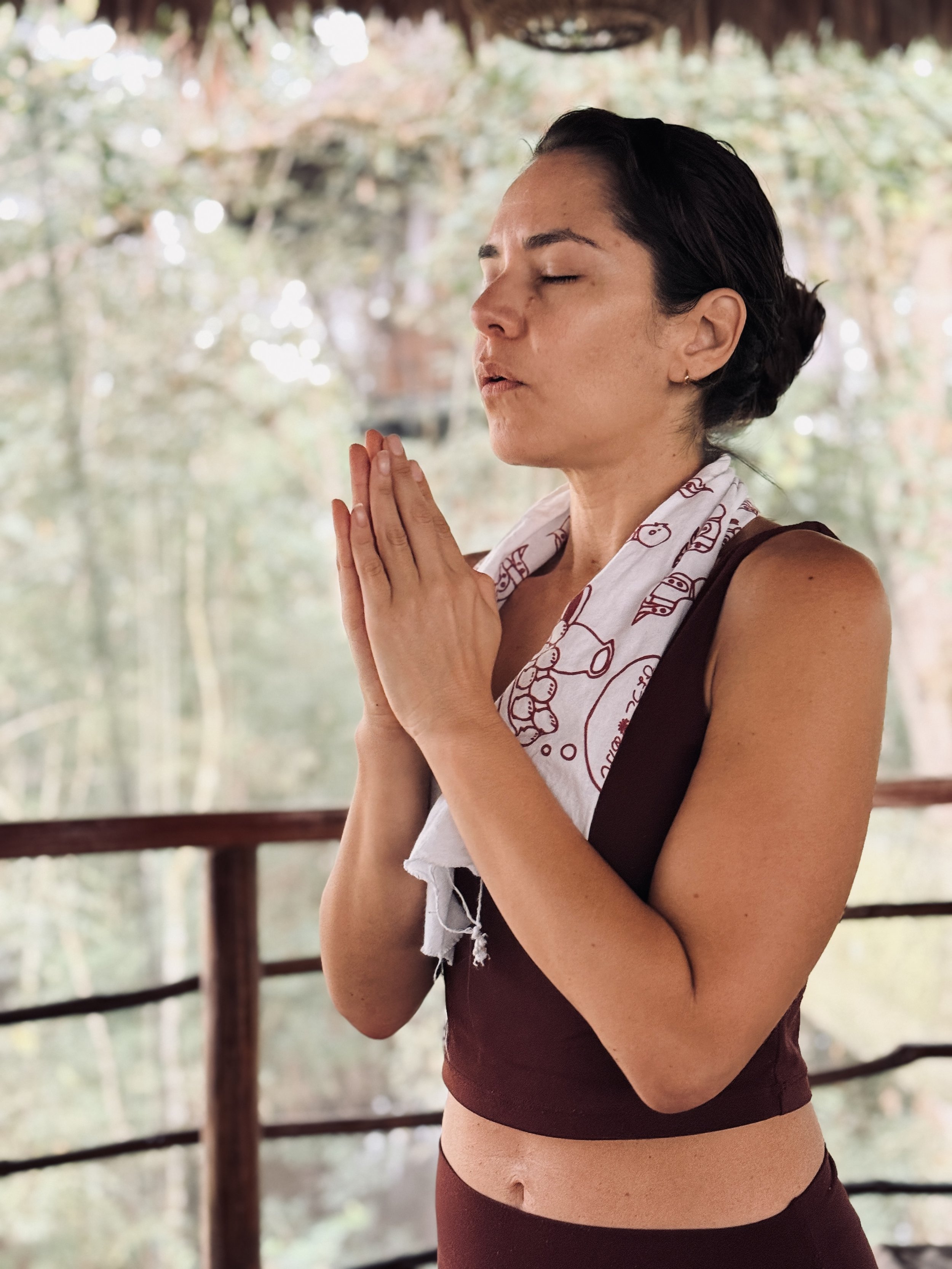
Chants
The Ashtanga opening mantra offers gratitude to the lineage of teachers who have enabled this ancient practice to survive over the years. It helps to cleanse the energy of the practice space and prepares the mind for the practice.
The Ashtanga closing mantra is a beautiful way to end the practice. It is a wish for peace, prosperity, and happiness for all the beings of the world. And this is in line with the real reasons for practicing yoga. We use the energy we created in the practice and send into the world in form of love and peace.
-
Om
Vande gurunam charanavinde
I bow to the lotus feet of the gurus,
Sandarsita svatmasukhava bodhe
who awakens insight into the happiness of pure being,
Nishreyase jangalikayamane
like the jungle healer, who brings great well-being,
Samsara halahala mohashantyai
‘Relief from delusion, the poison of Samsara’Abahu purusakaram
The upper body having human form,
Shankachakrasi dharinam
Holding a conch, discus and sword,
Sahasra sirasam svetam
Having a thousand branched heads of white [light].
Pranamami Patanjalim
I bow to Patanjali
Om -
Om
Svasti praja bhyaha pari pala yantam
May the rulers of the earth keep to the path of virtue
Nya yena margena mahi mahishaha
for protecting the welfare of all generations
Go brahmanebhyaha shubamastu nityam
May the religions, and all peoples be forever blessed
Loka samastah sukhino bhavantu
May the whole of all the worlds be happy
Om shanti shanti shanti
Om, peace peace peace